Back and neck pain
Let's talk pillows
By Dr Bianca Beaumont (Chiropractor)
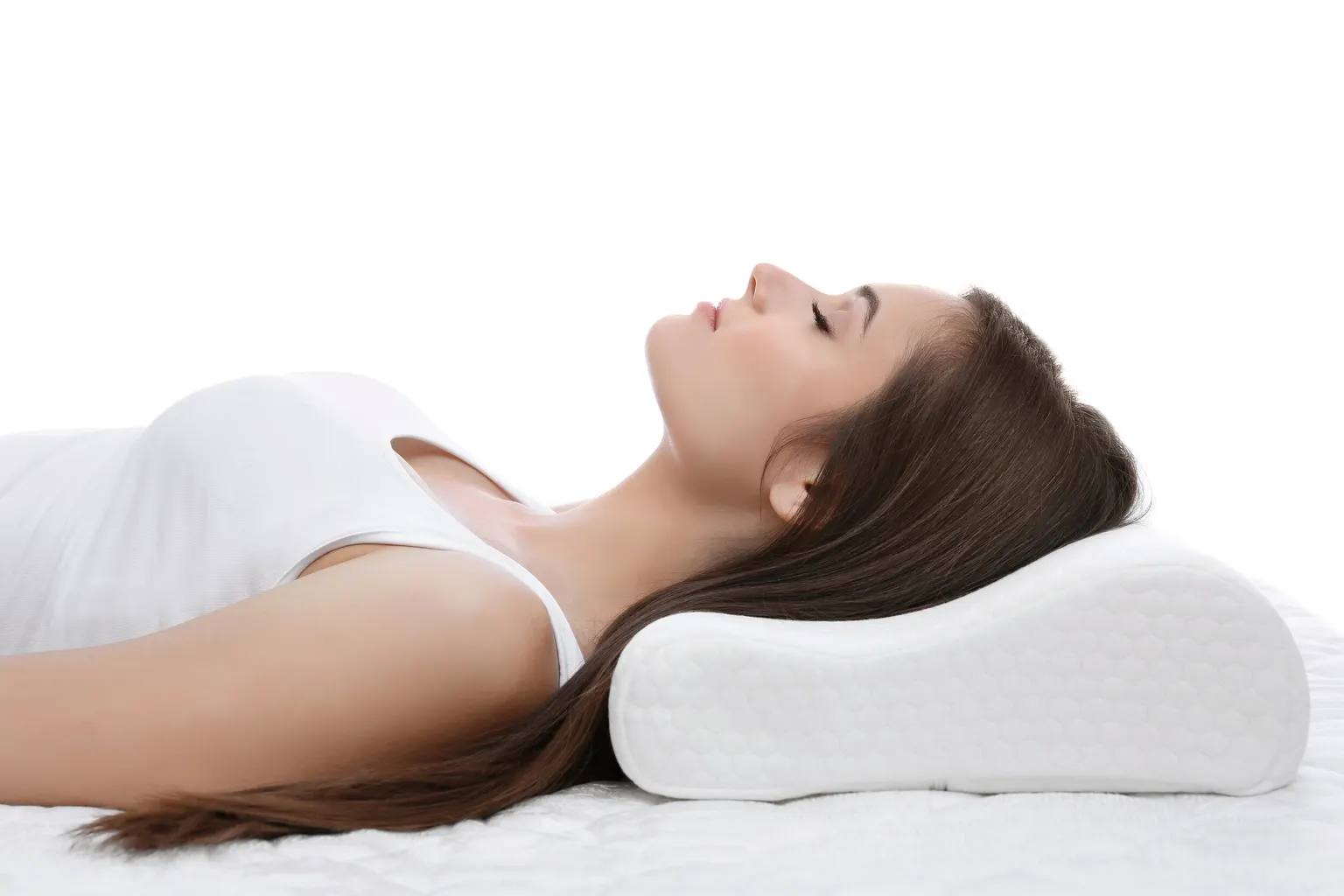
How we help you choose the right pillow
At Happy Healthy Grateful we are always being asked what type of pillow is best and how we fit a pillow. The right pillow for you will generally depend on the position you sleep in, your age and your size. Generally, there are two positions we suggest for sleep.
The first and most recommended is side sleeping.
The way we measure the right height pillow is to have you lie on your side and check your neck is level with the rest of your spine. The pillow must not cause the neck to tilt too much upwards or downwards and should allow for minimal pressure being exerted on the spine, neck and shoulder muscles.
The two main things we look at when fitting a pillow are:
- How broad your shoulders are (your frame size).
- How soft your bed is. If bed is very soft then shoulders will sink in and a lower pillow will be required. If bed is very firm then shoulders will not press into the bed so much and a higher pillow may be required to support the neck.
The second accepted position for sleeping is on the back
If purely a back sleeper then a lower pillow or the low end of the pillow is the right way to go. You just need something that supports the natural curve of your neck. The softness of the mattress plays a small part in deciding a back sleeping pillow but not as much as for side sleepers.
Back and Side Sleepers.
If you are a back and side sleeper then we recommend finding a pillow that fits for side sleeping but is of a softer density so that when you roll onto your back the pillow will not cause undue pressure to your neck.
Tummy Sleepers
Many people do sleep on their tummy but the consensus is that this should be avoided as it will place unnecessary pressure on the lower back during rest. It also keeps your neck turned to one side for hours, which many people find leaves them stiff. Try turning your head to the right and keeping it there for 6 to 8 hours and see how it feels!
Some Other Hints
We also take into account any existing health conditions. Also the length of time you are in bed is factored in when prescribing a pillow as other supports may be required.
Most importantly whichever pillow we prescribe must hold its shape during the night so as to give you the support that you are after for the whole night. For this it is recommended that pillows should have a good density (weight) to them to make sure they last the distance required.
We hope you find this helpful. If you have any questions about pillows, ask us at your next appointment, or call or text 0413 457 444.
Share this article
Want to talk it through?
Book a visit with Dr Bianca on Glenferrie Road, Malvern. No GP referral needed, and you can claim on the spot with HICAPS.
This article is general information only and is not a substitute for advice about your own health. Please see your GP or health professional about your situation. In an emergency, call 000. See also back and neck pain.